High Protein Cottage Cheese Pancakes
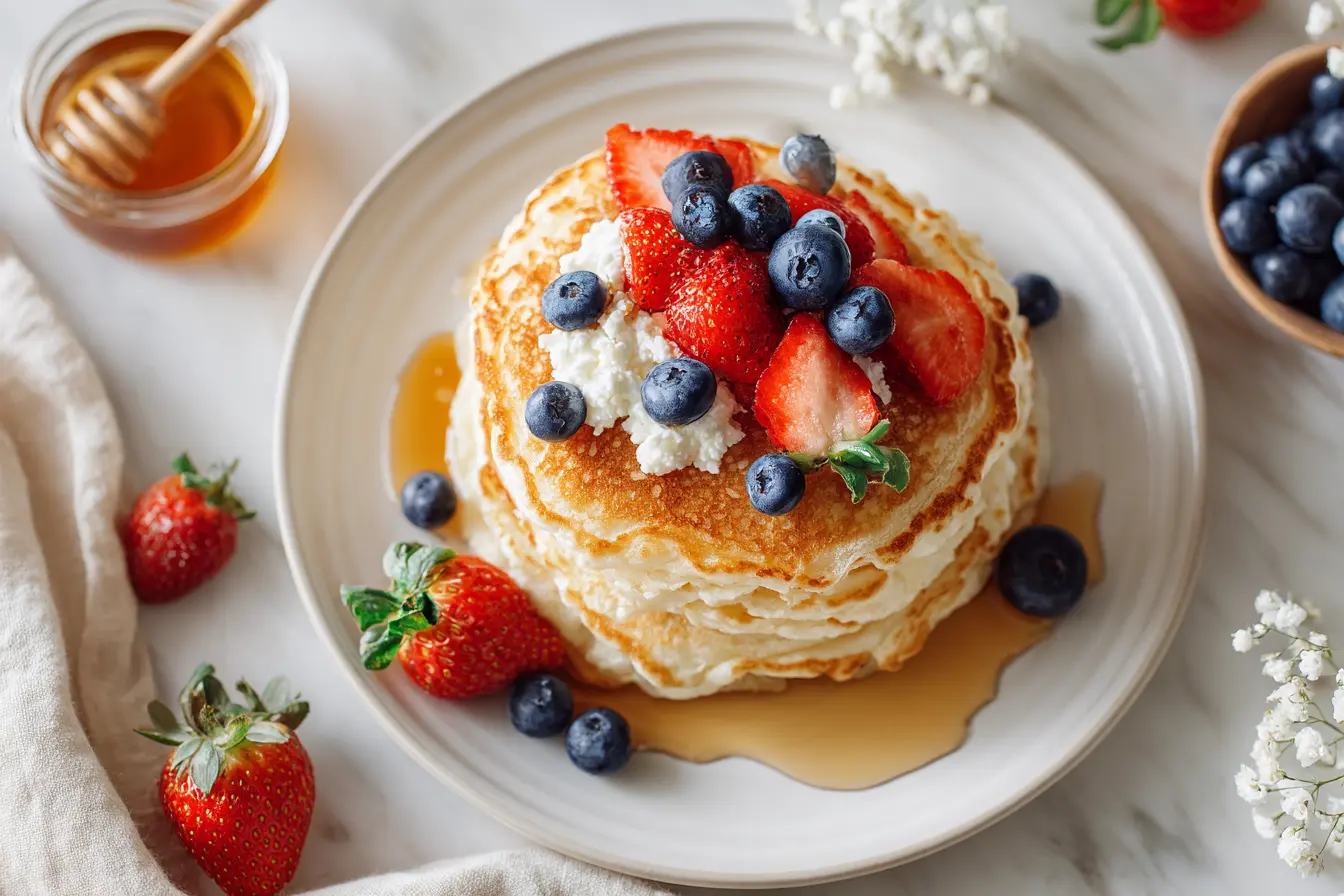
There is a version of pancakes that exists purely to taste good and leave you hungry forty minutes later. And then there is this version. High protein cottage cheese pancakes sit in a completely different category fluffy, slightly golden at the edges, with a tender interior that holds up under syrup without going soggy, and enough protein per serving to actually carry you through the morning without a second breakfast or a 10am snack situation.
Three main ingredients. One blender. Twenty minutes. That is the whole deal.
Why You’ll Love This Recipe
High Protein Without the Protein Powder
Cottage cheese is doing the heavy lifting here and it does it quietly. No chalky aftertaste, no gritty texture, no trying to figure out which protein powder does not ruin the flavor of everything it touches. One cup of full fat cottage cheese brings roughly 25g of protein to the batter before the eggs even get involved. By the time you plate a stack of four pancakes you are looking at somewhere between 25 and 30g of protein per serving depending on toppings and that is from real whole food ingredients, not a supplement.
Fluffy Texture That Actually Delivers
This is the thing people are most skeptical about and the thing that consistently surprises them. Blended cottage cheese creates a batter that is smoother and more cohesive than most standard pancake recipes the curds disappear completely, the protein structure supports the rise, and the result is a pancake that is genuinely fluffy rather than dense or rubbery. Which is not what most people expect when someone says cottage cheese pancakes. But here we are.
Ready in Under 20 Minutes
Blend everything together, heat the pan, cook in batches. From blender to plate in under twenty minutes which puts it comfortably in the category of weekday breakfasts rather than weekend projects. It is faster than driving to a breakfast spot and significantly higher in protein than anything you would order there anyway.
Ingredients You’ll Need
The Pancake Batter
- 1 cup full fat cottage cheese
- 2 large eggs
- 1/2 cup rolled oats (or oat flour for a smoother texture)
- 1 tsp vanilla extract
- 1/2 tsp baking powder
- Pinch of salt
- 1 tsp honey or maple syrup (optional, for a touch of sweetness in the batter)
Optional Add-Ins for More Protein
- 1 scoop vanilla protein powder (stir in after blending, adjust with a splash of milk if batter thickens too much)
- 2 tbsp Greek yogurt blended into the batter for extra creaminess and protein
- 1 tbsp chia seeds or hemp seeds folded in after blending
Topping Ideas
- Fresh mixed berries and a drizzle of honey
- Greek yogurt and sliced banana
- Almond butter and maple syrup
- Fried egg on top for a savory high protein finish
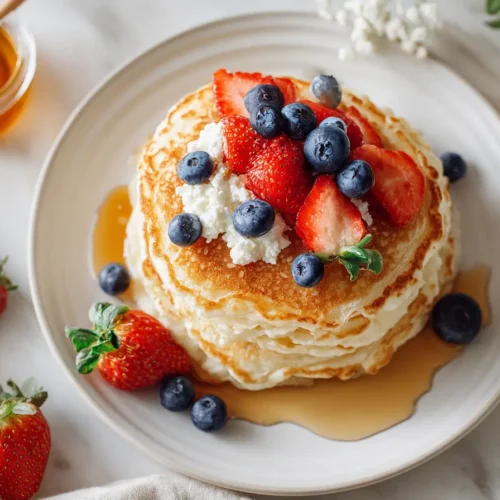
High Protein Cottage Cheese Pancakes
Equipment
- Blender or Food Processor
- Non-Stick Skillet or Griddle
- Spatula
Ingredients
The Pancake Batter
- 1 cup full fat cottage cheese small or large curd, both work once blended
- 2 large eggs room temperature
- 1/2 cup rolled oats or oat flour for a smoother texture, use certified gluten free oats if needed
- 1 tsp vanilla extract
- 1/2 tsp baking powder
- 1 pinch salt
- 1 tsp honey or maple syrup optional, for a touch of sweetness in the batter
Optional Add-Ins
- 1 scoop vanilla protein powder add a splash of milk if batter thickens too much
- 2 tbsp Greek yogurt blended into batter for extra creaminess and protein
- 1 tbsp chia seeds or hemp seeds folded in after blending
For Cooking
- 1 tsp butter or coconut oil for the pan
Instructions
- Add the cottage cheese, eggs, rolled oats, vanilla extract, baking powder, salt, and honey to a blender. Blend on high for 30 to 45 seconds until completely smooth with no visible curds or oat pieces. Let the batter rest for 2 to 3 minutes while the pan heats up.
- Heat a non-stick skillet or griddle over medium-low heat. Add butter or coconut oil and let it melt completely. The pan should be hot enough that a drop of water sizzles immediately but not so hot that the butter browns on contact.
- Pour approximately 3 tablespoons of batter per pancake onto the pan. Cook undisturbed for 2 to 3 minutes until bubbles form across the surface and the edges look set and matte rather than wet and glossy.
- Flip once and cook for another 60 to 90 seconds until the second side is golden. Do not press down on the pancakes after flipping. Repeat with remaining batter.
- Stack and serve immediately with toppings of choice. Greek yogurt and fresh berries, almond butter and maple syrup, or a fried egg alongside for maximum protein.
Notes
How to Make Cottage Cheese Pancakes
Step 1 — Blend the Batter
Add the cottage cheese, eggs, rolled oats, vanilla extract, baking powder, salt, and honey to a blender. Blend on high for 30 to 45 seconds until completely smooth. The batter should be pourable and lump-free no visible oat pieces, no cottage cheese curds, nothing that hints at what is actually in it. Let the batter rest for 2 to 3 minutes while the pan heats up. This gives the oats a moment to hydrate and the baking powder a moment to activate.
Step 2 — Heat the Pan
Set a non-stick skillet or griddle over medium-low heat. Add a small amount of butter or coconut oil and let it melt completely before adding any batter. The pan should be hot enough that a drop of water flicked onto the surface sizzles immediately but not so hot that the butter browns the second it hits. Medium-low is the key temperature here cottage cheese pancakes brown faster than standard pancakes and a pan that is too hot gives you a dark exterior and an undercooked center.
Step 3 — Cook and Flip
Pour approximately 3 tablespoons of batter per pancake onto the pan. Cook undisturbed for 2 to 3 minutes until bubbles form across the surface and the edges look set and dry rather than wet and glossy. This is the flip signal. Flip once and cook for another 60 to 90 seconds until the second side is golden. Do not press down on the pancakes after flipping it pushes the air out and flattens the texture you worked to create.
Step 4 — Serve and Top
Stack and serve immediately with your toppings of choice. A drizzle of honey and fresh berries keeps it clean. Greek yogurt on top adds another protein layer. A fried egg alongside pushes the total protein past 35g without any additional cooking complexity. Whatever direction you go, eat them while they are warm cottage cheese pancakes are best in the first five minutes off the pan.
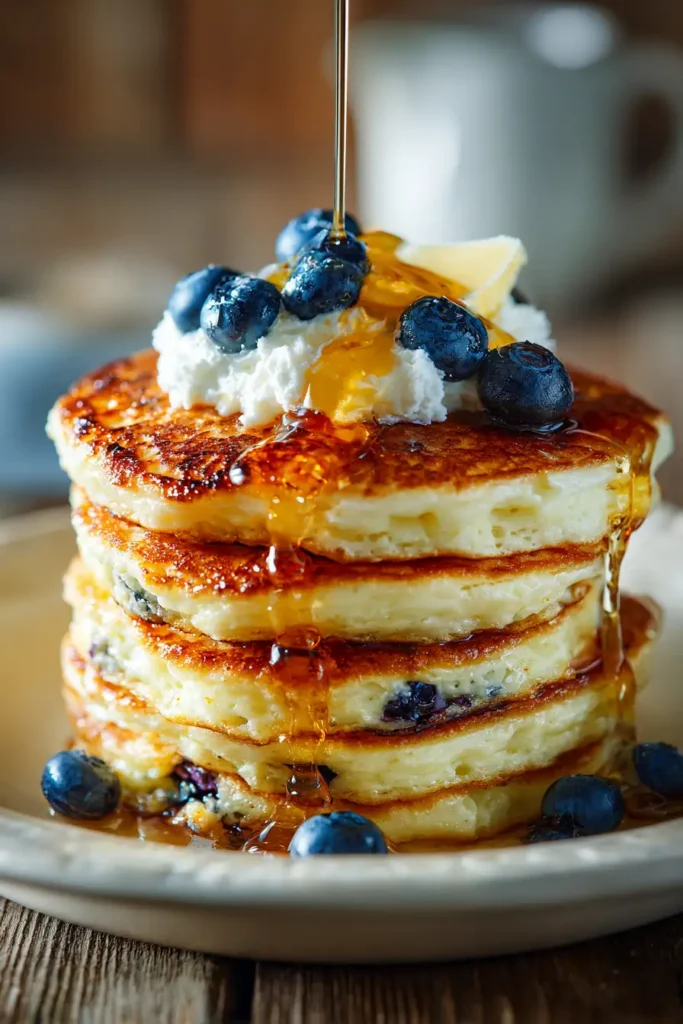
Why Cottage Cheese Makes the Best Pancakes
How It Affects Texture
The protein structure in cottage cheese behaves differently from flour protein during cooking. It sets firmly when heated which gives the pancakes a stable structure that holds its shape through flipping without falling apart. The fat content in full fat cottage cheese adds moisture and richness that keeps the interior tender rather than dry. The combination of protein-driven structure and fat-driven moisture is essentially what every pancake recipe is trying to achieve cottage cheese gets you there with fewer ingredients than most.
Full Fat vs. Low Fat Cottage Cheese
Full fat gives you a richer, more tender pancake with better flavor. Low fat works but the result is slightly less creamy and a little more lean-tasting which some people prefer but it is worth knowing the difference going in. Fat free cottage cheese produces a noticeably drier texture and is not recommended for this recipe. The fat is doing real work here and removing it entirely shows in the final result.
Does It Taste Like Cottage Cheese?
No. This comes up constantly and the answer is consistently no. Blending the cottage cheese completely eliminates the curd texture and the mild tang mellows significantly during cooking. What you taste is a slightly richer, slightly more substantial pancake than standard flour-and-milk versions but nothing that announces itself as cottage cheese. People who claim to dislike cottage cheese eat it without issue every single time.
How to Get Fluffy Cottage Cheese Pancakes Every Time
Why the Blender Is Non-Negotiable
Mixing by hand leaves visible curds in the batter which create uneven texture in the finished pancakes. The blender is what makes these work. It fully incorporates the cottage cheese into a smooth emulsified batter that cooks evenly and rises uniformly. A food processor works too. A fork and a prayer does not.
Pan Temperature Matters More Than You Think
Medium-low is the target. Not medium. Not medium-high. The higher protein content in this batter means the exterior sets and browns faster than a standard pancake batter which means a pan that is too hot gives you a beautifully dark bottom and a raw center. Give the pan a full two minutes to reach an even temperature before the first pancake goes in. The first pancake is always a test pancake anyway. That is just the law of pancakes.
How to Know When to Flip
Wait for the bubbles. The surface of the pancake should show bubbles forming and some of them popping, and the edges should look matte and set rather than shiny and wet. That is the moment. Flipping too early is the most common mistake and it results in a pancake that folds rather than flips which is a fixable problem but an annoying one.
Toppings and Serving Ideas
High Protein Toppings
Greek yogurt instead of whipped cream adds 8 to 10g of protein per generous dollop. A spoonful of almond butter or peanut butter adds another 3 to 4g and a richness that pairs genuinely well with the slightly eggy flavor of the pancakes. A fried or poached egg on the side turns this into a meal that hits 35g of protein before you have even thought about it.
Fresh Fruit and Natural Sweeteners
Fresh blueberries, sliced strawberries, or banana coins with a light drizzle of honey or maple syrup is the cleanest and most visually appealing option. The natural acidity in the berries cuts through the richness of the cottage cheese batter in a way that feels intentional. Frozen berries thawed and slightly warmed in a small pan make an excellent quick compote if you have an extra three minutes.
Savory Topping Options
Cottage cheese pancakes work surprisingly well in a savory direction. A fried egg, a few slices of smoked salmon, and a dollop of Greek yogurt with chives on top is a legitimately excellent combination that most people would not think to try and almost everyone enjoys once they do. Skip the honey in the batter if going savory just leave it out entirely.
How to Meal Prep Cottage Cheese Pancakes
Storage Instructions
Cool completely on a wire rack before stacking to prevent steam from making them soggy. Store in an airtight container in the refrigerator with parchment paper between each pancake so they do not stick together. They hold their structure remarkably well compared to standard pancakes which tend to go gummy overnight.
How Long They Last
Four days in the refrigerator without any meaningful loss of quality. The texture stays close to fresh maybe marginally denser after a day or two but nothing that makes them less enjoyable. Freeze for up to two months in a zip-lock bag with parchment between each pancake.
How to Reheat Without Losing the Texture
Toaster is the best method. One to two cycles brings them back almost exactly to fresh with a slightly crispier edge that is arguably better than the original. Microwave works 30 to 45 seconds on medium power with a damp paper towel over the top to trap steam. Avoid high power which makes them rubbery in about fifteen seconds flat.
Variations and Swaps
Gluten Free Version
Swap the rolled oats for certified gluten free oats or replace entirely with almond flour. Almond flour gives a slightly denser, nuttier pancake that is excellent in its own right and adds a small amount of additional healthy fat. The batter may need a minute longer to set in the pan watch the edges rather than the clock.
Adding Protein Powder
One scoop of vanilla protein powder blended into the batter pushes the protein count past 40g per serving. The batter will thicken after blending add a splash of milk or water to bring it back to a pourable consistency. Some protein powders make the batter slightly gummy so start with half a scoop if you are trying a new brand for the first time.
Blueberry or Banana Variations
Fold fresh blueberries into the batter after blending for a classic combination that works in basically any pancake recipe and this one is no exception. Mashed banana blended directly into the batter adds natural sweetness, a subtle flavor shift, and a slightly denser texture reduce the honey or skip it entirely if using banana since the natural sugars are sufficient.
Nutrition and Protein Breakdown
Per serving (4 pancakes made with 1 cup cottage cheese and 2 eggs, no toppings, approximate):
- Calories: ~280
- Protein: ~26g
- Fat: ~10g
- Carbohydrates: ~24g
- Fiber: ~2g
Add a scoop of protein powder to push past 40g. Numbers shift based on cottage cheese brand and fat content full fat will come in higher on calories and fat, low fat lower on both. Check your specific labels for the most accurate counts.
Frequently Asked Questions
Do cottage cheese pancakes taste like regular pancakes?
Closer than you would expect. The texture is slightly richer and more substantial and the flavor has a mild depth that standard pancakes do not have, but nothing that reads as cottage cheese once the batter is cooked. Most people cannot identify the main ingredient without being told.
Can I make cottage cheese pancakes without a blender?
Technically yes but the result is noticeably different. Unblended cottage cheese curds remain visible and create an uneven texture in the finished pancake. A food processor gets you most of the way there. If you have neither, mash the cottage cheese as thoroughly as possible with a fork before mixing the pancakes will still taste good, just less uniformly textured.
What cottage cheese is best for pancakes?
Full fat small curd cottage cheese gives the best result creamier batter, richer flavor, more tender finished pancake. Large curd works the same way once blended. Low fat is acceptable. Fat free is not recommended.
Are cottage cheese pancakes good for weight loss?
They can be a strong option. High protein breakfasts support satiety which reduces overall calorie intake throughout the day. At around 280 calories and 26g of protein for a four-pancake serving they compare very favorably to standard pancakes which typically deliver half the protein at similar or higher calories.
Can I freeze cottage cheese pancakes?
Yes. Cool completely, layer with parchment paper, freeze in a zip-lock bag for up to two months. Reheat in the toaster directly from frozen for the best texture. No thawing required.
How much protein is in cottage cheese pancakes?
Approximately 26g per four-pancake serving without protein powder. Add one scoop of vanilla protein powder and that climbs to 40g or more depending on the brand. The cottage cheese and eggs together are doing most of the protein work before any supplements get involved.
The Bottom Line
High protein cottage cheese pancakes are the rare breakfast that delivers on both nutrition and actual enjoyment without asking you to compromise on either. Fluffy, filling, genuinely fast, and flexible enough to go sweet or savory depending on what the morning calls for. Make a double batch on Sunday and the toaster handles breakfast for the rest of the week.
Stack them high. Mean it.
See also: high protein breakfast recipe